The Oldest Carpet in the World
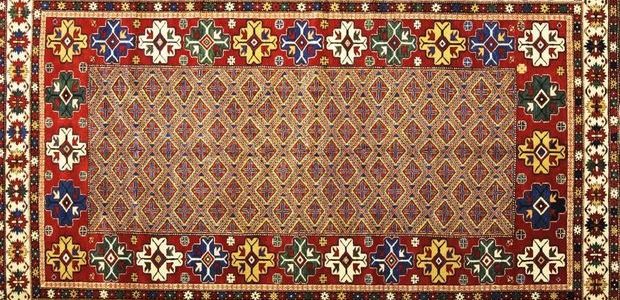
In the mid-20th century, Russian archaeologists discovered a remarkable artifact in an ancient kurgan located in the Altai region, known by local Turks as Pazyryq (Basyryq). Among the Scythian cultural items found there was a carpet that had retained its colors and survived to this day. This was the Barda (Saga-Oghuz) carpet, woven in Karabakh 2,500 years ago.
The Largest Carpet in the World
Countries that lead the global carpet-making industry have long evaluated carpets not only for their beauty and quality but also for their size. Throughout different periods, several carpets have been recognized as the “largest carpet in the world.” The famous “Ardabil Carpet,” a masterpiece of the Tabriz carpet-weaving school woven with the “Lechekturunc” composition, was considered the world’s largest carpet for many years.
Today, Iran is regarded as one of the leading countries in the world in the textile and especially carpet-weaving industry. For this reason, carpets woven in Iran at various times and labeled as “the largest in the world” have attracted great interest. The world’s largest collective prayer carpet is laid inside one of the world’s largest mosques, located in Abu Dhabi, the capital of the United Arab Emirates. This carpet is valued at 8 million USD and can accommodate 9,000 worshippers at once.
In 2001, a carpet woven in Turkmenistan was included in the Guinness Book of Records. This carpet weighed 1,200 kilograms and covered an area of 301 square meters. In some countries, carpets are designed to stand out with their size and color. One of the key elements of film festivals held in Rome is the red carpet ceremony. The world’s largest red carpet (1,300 square meters) was laid at the entrance during the opening of the festival.
The Thinnest Carpet in the World
The world’s thinnest carpet was showcased at the East Mediterranean International Travel and Tourism Exhibition in Istanbul, Türkiye. This hand-woven carpet was brought from the village of Harake in the Kocaeli region. The masterpiece was entered into the Guinness Book of Records as “the world’s thinnest carpet.”
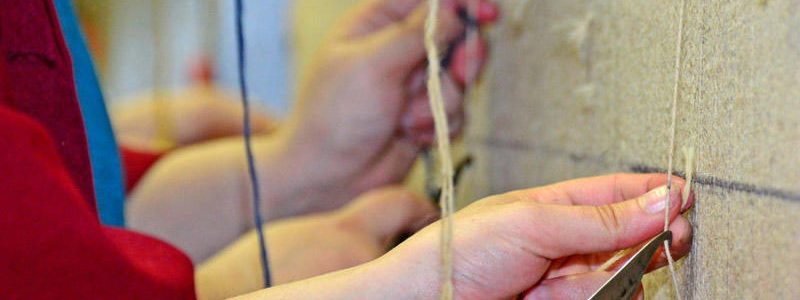
According to its weaver, Nuray Kıvanç, the carpet contains 1,024 knots per square centimeter. She states that the carpet is not only the thinnest but also the lightest in the world. Weighing just 15 grams, it took five years to weave, with ten hours of work per day.
Interesting Carpets
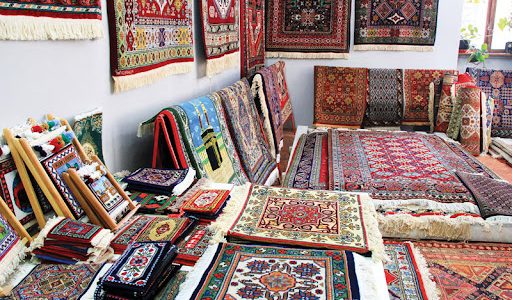
Unusual, fascinating, and extraordinary carpets are now recognized worldwide as “valuable handicrafts.” Unique carpets woven by professional artisans in Iran, India, China, and Azerbaijan stand out for their remarkable and curious features. These expensive carpets are displayed in museums and exhibitions, and many decorate homes with their distinctiveness.
Carpets woven in ancient times were typically single-sided. However, some modern carpets stand out with an unusual feature—their reverse side is also piled, just like the front. These are known as “double-sided carpets.”
In Africa, some carpets are made from spider silk. Africans spent four years weaving such a carpet, using primarily spider silk. This highly labor-intensive work is valued at 500,000 USD. This exquisite piece of art is currently preserved in the New York Museum in the United States.
In Richmond, Virginia, USA, one of China’s most renowned and influential artists, Xu Bing, “wove” a carpet resembling tiger skin using 50,000 cigarettes. The purpose of creating this unique artwork was to encourage people to give up harmful habits such as smoking. Weighing 199.5 kilograms, the carpet is currently exhibited at the Virginia Museum of Fine Arts.
In Brussels, the capital of Belgium, a magnificent carpet made of begonias has been woven annually since 1971. Created by dozens of volunteers in the famous Grand Place square, the carpet consists of nearly 800,000 begonia flowers. The flowers are arranged one by one to form a 2,000-square-meter carpet. Each year, the carpet is woven with different patterns.